-
Приведите себя в форму воздержанием
-
Приведите себя в форму воздержанием
Многие религиозные обычаи, в своей основе, связаны со здоровьем. Помимо ритуального омовения, исключение из пищи свинины или отказ от употребления алкоголя – они включают в себя и голодание. Что же дает, так называемый, кулинарный перерыв?
Практически все основные религии мира знакомы со временными воздержаниями. Верующие христиане, евреи и мусульмане – ограничивают себя в определенное время в году. В нашей культуре, эта фаза находится в начале или, по крайней мере, в первой трети года. Религии традиционно предусматривают не только отказ от твердой пищи, но и селективное прекращение потребления алкоголя и мяса – это тоже является одной из составляющих. Последнее, дало даже название: Слово карнавал происходит от итальянского «carne vale», что в переводе означает «мясо, прощай».
Постящиеся должны проявлять смирение и скромность, и при этом приобретать духовность. Кроме того, коллективное ограничение помогало сберечь заготовленные ресурсы, которых раньше, особенно ближе к концу зимы, не хватало. Сам ритуал, имеет оздоровительную основу. Тот, кто употребляет в пищу много мяса, может нанести вред своему здоровью. Одна из причин заключается скорее всего в том, что организм перенасыщается железом, которое в избытке бывает токсичным. Другая причина, может быть связана с кишечной флорой. Исследования показали, что кишечные бактерии превращают определенные компоненты мяса в молекулы, которые предотвращают возможность эластичного расширения наших сосудов. Это способствует их закупорке. Если мясоеды обойдутся без свинины, говядины и т.п., по крайней мере в течении двух недель, их кишечная флора станет похожа на флору людей, питающихся по принципам веганства.
Алкоголь также может нанести вред организму, и в этом случае может помочь сознательное воздержание. Тот, кто много выпивает – получает ожирение печени. Если состояние сохраняется на протяжении длительного периода времени, клетки печени «задыхаются» что с годами может привести к циррозу и разрушению органа. Для людей, которые ежедневно выпивают, было бы хорошо каждые 2 – 3 месяца делать печени свободную, от алкоголя, неделю. Это поможет ей убрать накопившийся жир из клеток. Также неплохо: Придерживаться фиксированного времени выпивания, например, употреблять алкоголь только с 19:00 до 21:00 – к ужину. Это даст клеткам печени время на восстановление.
Ограничение потребления сладкого тоже регенерирует орган, так как и сахар может привести к ожирению печени. После воздержания, наш центральный орган обмена веществ реагирует более чувствительно на гормон инсулин, который, в свою очередь, улучшает уровень жиров и сахара в крови, а вместе с этим – улучшает кровяное давление. Особенно большой потенциал «сократить сладкое» кроется в ограничении употребления напитков. Пи этом, некоторые фруктовые соки содержат значительно больше сахара, чем сладкие напитки. Но сахар скрывается и в некоторых овощных соках, фруктовых консервах, йогуртах, смесях мюсли и даже в соусах для барбекю. Однако, если слишком долго полностью отказываться от калорий, ничего хорошего Вы для себя не сделаете. Организм попадает в ситуацию экстремального состояния, в котором он, где это только возможно, экономит калории при этом начиная сокращать необходимую организму мышечную массу. В связи с этим, голодание не обязательно должно быть радикальным, чтобы принести пользу для здоровья. Наоборот: Время от времени проводимое, целенаправленное и сознательное воздержание – имеет больше смысла.
Автор статьи: Профессор, доктор медицинских наук Давид Фе
00 -

-

The effect of coffee consumption in several liver diseases
-Non-alcohol-induced fatty liver disease (NAFLD) is a widespread chronic liver disease. It is considered a multifactorial disorder that can lead to liver fibrosis and is a global public health problem.
Previous studies suggested that coffee consumption might have a possible protective effect against NAFLD and liver fibrosis, but the results of the studies were inconsistent.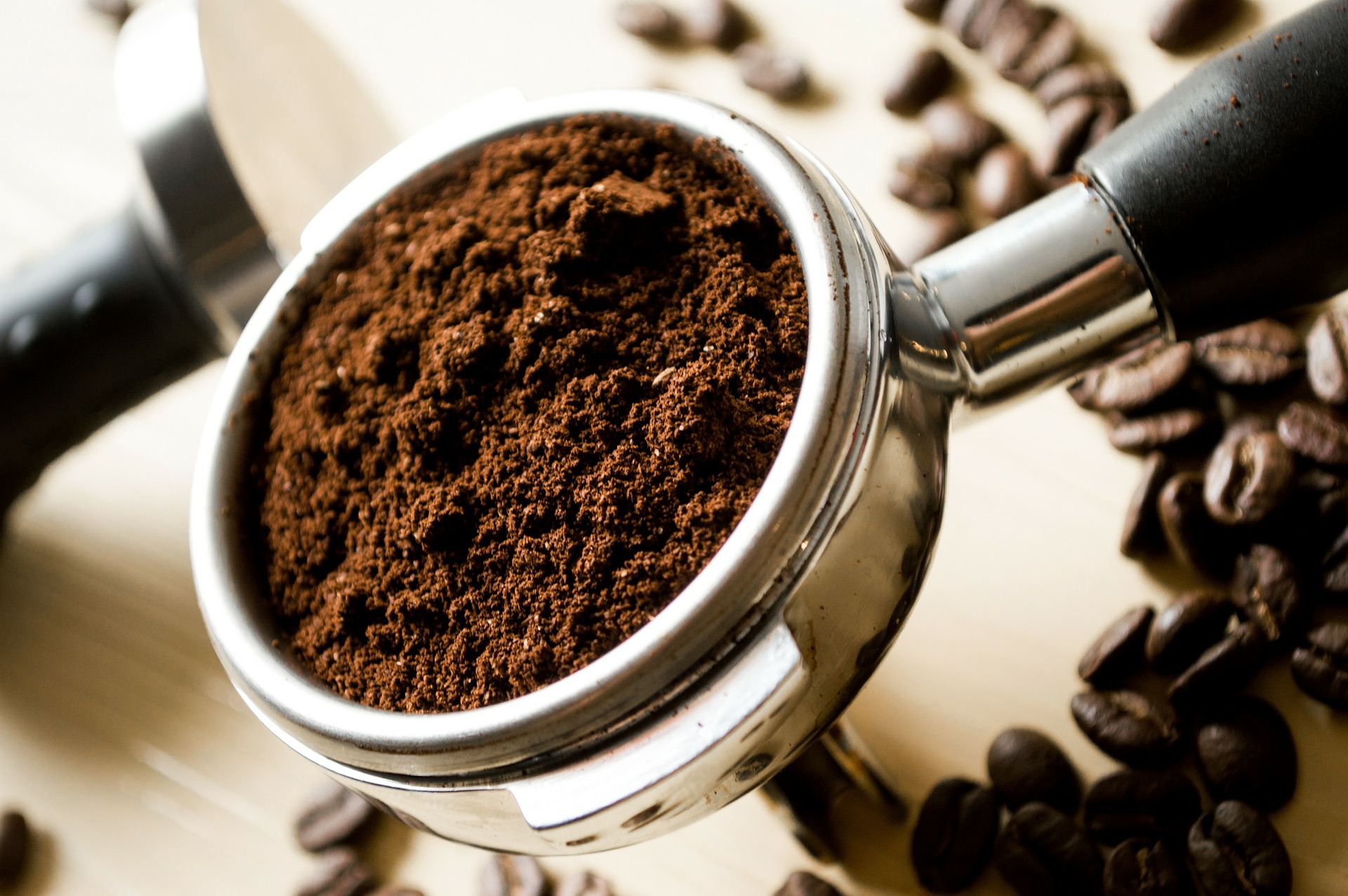
(Credits for the pic above: Coffe Geek TV )
Against this background, American scientists have systematically analysed the results of eleven epidemiological studies. Their recently published work includes two meta-analyses.
The first meta-analysis examines the effect of coffee on the development of non-alcohol-induced fatty liver disease in those who drank or did not drink coffee. This analysis involved 71,787 participants aged between 20 and 70 years. The subjects were asked about their coffee consumption in a questionnaire. The second meta-analysis compares the risk of developing liver fibrosis in NAFLD patients who consumed coffee or did not drink coffee. Here 1,338 subjects between 20 and 70 years of age who had already been diagnosed with non-alcohol-induced liver disease took part.
Results of the two analyses show the following:
The NAFLD risk was significantly lower among coffee drinkers compared to those who did not consume coffee. The researchers also found a significantly reduced risk of liver fibrosis in NAFLD patients who drank coffee compared to those who did not.
The authors discuss the reasons for the possible liver-protective effects. Ingredients in coffee, such as caffeine, chlorogenic acids, potassium, niacin (vitamin B3), diterpenes and the coffee oils cahweol and cafestol could mediate antioxidant, anti-inflammatory and anti-fibrosis effects.
The scientists concluded that regular coffee consumption is associated with a significant reduction in the risk of NAFLD. It is also significantly associated with a reduced risk of developing liver fibrosis in previously diagnosed NAFLD patients.
Whether coffee consumption could be considered a preventive measure for NAFLD and liver fibrosis needs to be investigated in further epidemiological studies.
-
Novel Swiss made biodegradable heart implant
-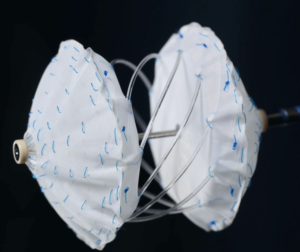
Pictures by CARAG AG
Biodegradable: First children with novel heart implants
Prof. Dr. Oliver Kretschmar, Head of Cardiology at the #Children’s Hospital Zurich, inserted biodegradable heart implants in two children at the beginning of August. They dissolve almost completely over time. This is a first in Switzerland.The implant from the Swiss company #CARAG AG is a kind of “umbrella” that closes congenital defects in the atrial septum of the heart. The framework consists of lactic acid, plus two thin plastic discs made of polyester. Within a few weeks it is covered with the body’s own tissue. After a maximum of two years, the framework has completely dissolved.
This innovation represents a further milestone in the treatment of congenital heart defects in children. Until now, implants have been made of a special metal alloy that grows into the septum of the heart and remains there for the rest of the patient’s life. Very rarely this can lead to allergies, blood clots, injuries to the heart or cardiac arrhythmia.
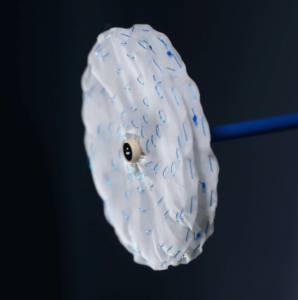
Pictures by CARAG AG
-
Swiss healthcare system – one of the best – worlwide
- I just came across this interesting article. Not the most recent but definitely worth reading.
https://www.thelocal.ch/20170519/study-swiss-healthcare-is-third-best-in-the-world
-

-
Coronavirus – the situation in Switzerland
-After imposing unprecedented restrictions on public life to contain the pandemic, Switzerland has eased its measures and re-opened its land borders. Here is where things stand and the latest on the measures still in place.
- On June 27 the head of the federal health office described the recent increase in cases as “disturbing” (see graphs below).
- The government is still urging the population to follow social distancing and hygiene recommendations. There is no obligation to wear face masks in public, but the government says people should wear a mask if they can’t keep a 1.5-metre distance.
- Since June 22, public and private events of up to 1,000 people have been permitted on condition that contact tracing can be guaranteed. Larger events are still banned.
- The SwissCovid contact tracing app became available on June 25; as of June 27, about 750,000 people had downloaded it.
- The “extraordinary situation”, which began on March 17, was officially lifted on June 19. The situation is now “special”.
- Travel is now possible between Switzerland and the European Union, EFTA countries and the United Kingdom.
How does Switzerland plan to ease the coronavirus lockdown?
The government approach to loosening the lockdown is based on a number of factors and expert recommendations aimed at protecting the public. The economy is also a consideration.

-
Dairy: Is it good or bad for you?
-
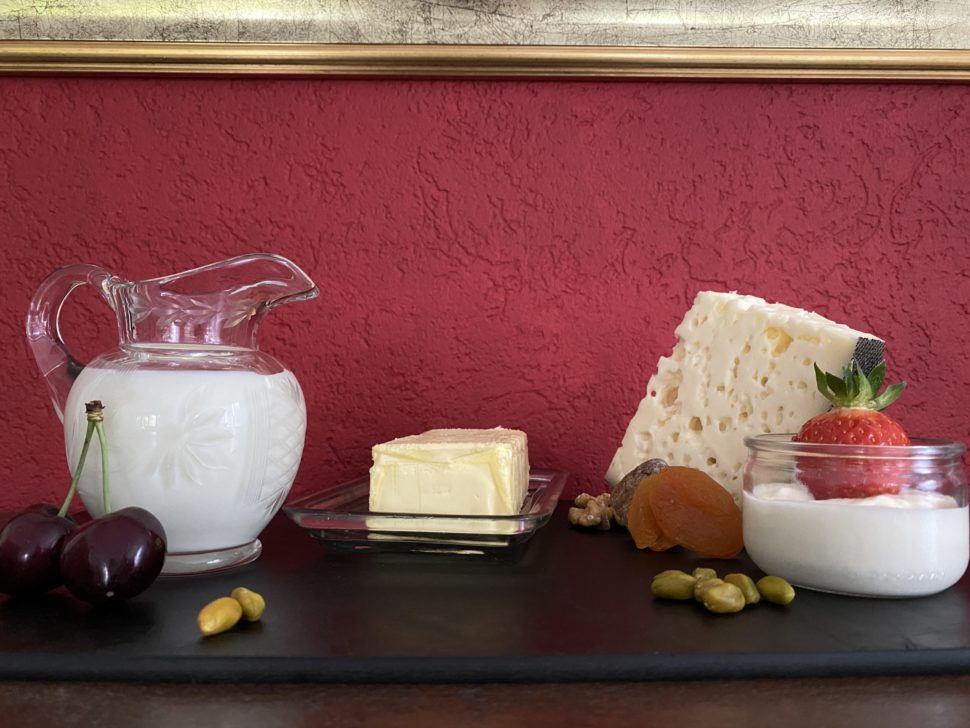
Dairy is a controversial and confusing food group. Health organizations promote dairy as vital for improved bone health, yet other experts disagree and hail dairy as detrimental to health. Who is correct? Is dairy good or bad for your health? We examine the facts.
Let us know your opinion in the comments!
What do government health guidelines say? According to the United States Department of Agriculture (USDA) food MyPlate guidelines, to get all the nutrients you need from your diet, healthy food and beverage choices should be made from all five food groups, including fruits, vegetables, grains, protein foods, and dairy.
The dairy food group consists of all fluid milk products and many foods that are made from milk. The USDA recommended food choices from the dairy group should retain their calciumcontent and be low-fat or fat-free. Fat in milk, yogurt, and cheese that is not low-fat or fat-free will count toward your limit of calories from saturated fats.
While calcium-fortified soymilk is included as part of the dairy group, food products such as butter, cream, sour cream, and cream cheese are not included due to their low calcium content.
Daily dairy recommendations depend on your age. Children 2-3 years old require two cups of dairy per day, 4-8-year-olds need 2.5 cups per day, and three cups per day are recommended for age 9 and upward.
For people who do not consume dairy products, the USDA mention the following foods to contribute toward calcium intake: kale leaves, calcium-fortified juices, breads, cereals, rice or almond milk, canned fish, soybeans, other soy foods, such as tofu, soy yogurt, and tempeh, and some leafy greens including collard and turnip greens, kale, and bok choy.
They point out that the amount of calcium that is absorbed from these foods varies.
Nutrients in milk
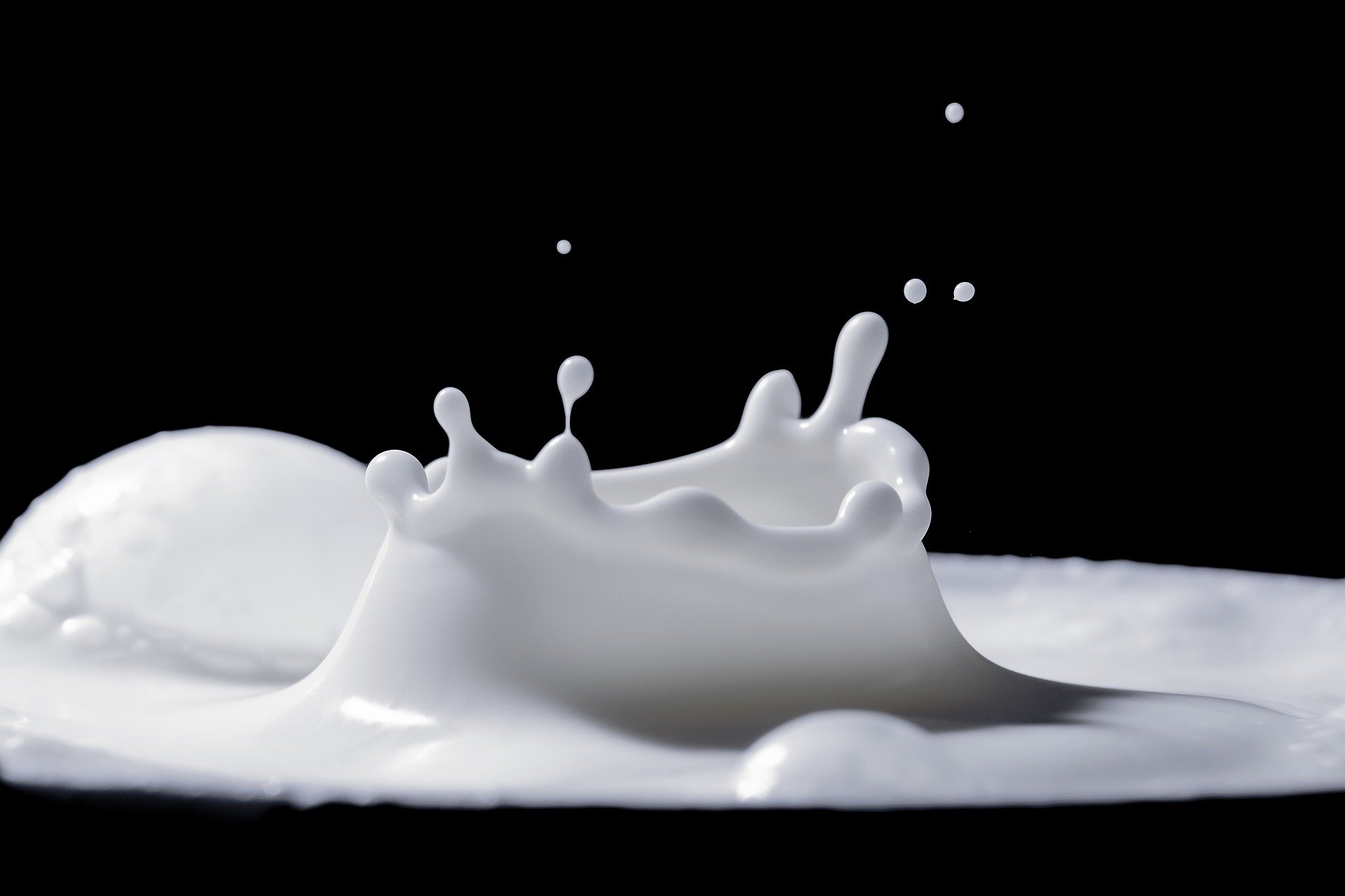
Milk is a good source of calcium potassium, vitamin-D, and protein.
The USDA report dairy products are the primary source of calcium in the American diet. They also say that calcium helps to build bones and teeth, maintain bone mass, improve bone health, decrease the risk of osteoporosis and, what is more, diets that have an intake of three cups of dairy products per day can improve bone mass.
Furthermore, they note that dairy intake is particularly important to bone health during childhood and adolescence – a time when bone mass is being built.
Potassium in milk may help with maintaining blood pressure. Vitamin D helps the body maintain the correct calcium and phosphorous levels, which, in turn, contributes to building and maintaining bones. Dairy intake is also associated with a reduced risk of cardiovascular disease,type 2 Diabetes , and lower blood pressure.
The USDA highlight that it is important to choose low-fat or fat-free foods from the dairy group because foods high in saturated fats and cholestrol have adverse health implications. They say that diets high in saturated fats raise “bad” low-density lipoprotein (LDL) cholesterol in the blood. High LDL cholesterol increases the risk for coronary heart disease. Whole milk and many dairy products are high in saturated fat.
To help keep blood cholesterol levels healthy, the USDA recommended limiting the intake of foods high in saturated fat.
In summary, government guidelines say that milk is rich in nutrients. Calcium-rich low-fat or fat-free dairy products are essential for bone health, heart health, and type 2 diabetes, but full-fat dairy increases the risk for coronary heart disease. All sounds simple enough. So where does the controversy come in?
Is eating dairy ‘natural’?
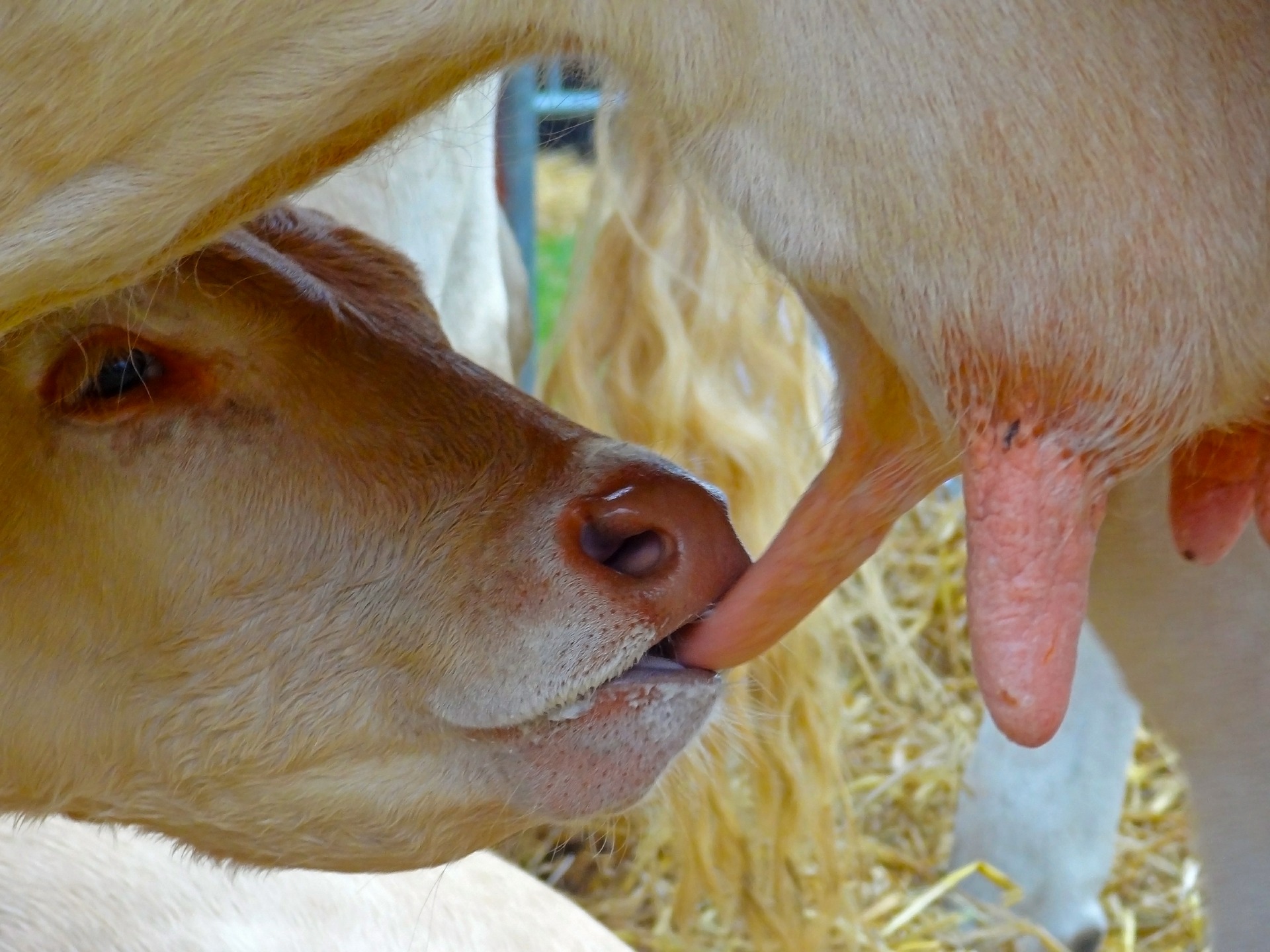
It is often argued that dairy products should not be consumed since it is not “natural” to do so.
Cow’s milk is designed to provide all the protein, micronutrients, and fatty acids that calves need to grow in the same way that breast milk is designed to nurture human babies.
Not only are humans the only species that consumes milk as adults, but we are also the only species that drinks milk from other animals. Humans are not calves, and they have no need to grow, so why drink milk? Quite a convincing argument.
Dairy does not appear to be essential for humans from an evolutionary perspective and was not consumed until after the agricultural revolution. However, in some parts of the world, dairy has been consumed for thousands of years, and research has shown that genes have altered in humans to accommodate dairy consumption.
While consuming dairy may not have once been natural for humans, the evidence that shows that we have genetically adapted to eat dairy indicates that it may now be natural for us to eat and drink it.
Lactose intolerance
Another argument against dairy consumption is that around 75% of the world’s population and about 25 percent of the people in the U.S. lose their ability to produce digestive lactase enzymes sometime after weaning.
Lactase enzymes are present in infants and young children to help them break down and digest lactose – a sugar present in milk. A lack of lactase enzymes means that lactose cannot be split into glucose and galactose for absorption into the bloodstream, which results in lactose-intolerance.
After eating lactose-containing dairy products, people who are lactose intolerant experience abdominal bloating, pain, nausea, flatulence, and diarrhea. Some lactose intolerant individuals can eat fermented dairy, such as yogurt, or high-fat, dairy like butter.
Most people of Northern European ancestry can digest lactose with no problems whatsoever.
Full-fat dairy and cardiovascular disease
The USDA guidelines and conventional wisdom dictate that full-fat dairy increases the risk of heart disease due to its high saturated fat content.
The theory behind this idea is that saturated fat raises levels of LDL cholesterol in the blood, LDL cholesterol then lodges in the arteries, which causes atherosclorsis and eventually, heart disease. However, despite it being a dietary recommendation, this theory has never been proved and has been debunked in recent years.
A systematic review and meta-analysis published in the Annals of Internal Medicine and a meta-analysis published in The American Journal of Clinical Nutrition found no link between dietary saturated fat and an increased risk of coronary heart disease, stroke , and cardiovascular disease.
A study that used data from the Nurses’ Health Study – a long-term epidemiological study in the U.S. examining risk factors for major chronic disease in women – found that high intake of dairy fat is connected with a greater risk of coronary heart disease.
However, other studies have shown that full-fat dairy may protect against heart disease and stroke.
For example, research examining 10 studies that included full-fat dairy consumption showed that drinking milk might be associated with “a small but worthwhile reduction in heart disease and stroke risk.”
In grass-fed cows, full-fat dairy has been linked with a reduced risk of heart disease and stroke. One study indicated that people who consumed the most full-fat dairy had a 69 percent lower risk of cardiovascular death than individuals who consumed the least.
Research examining the role of dairy in heart disease is conflicting. However, heart disease risk seems to be significantly lower when consuming full-fat dairy in countries with grass-fed cows.
Does dairy benefit bone health?
Most health organization guidelines recommend an intake of two to three servings of dairy every day to ensure adequate calcium for bone health.
Some experts disagree with these guidelines because countries with higher dairy consumption have higher rates of osteoporosis than countries with lower intakes of dairy. However, it has to be noted that dairy consumption is not the only difference between these countries and does not conclude that dairy causes osteoporosis.
Two observational studies are often cited in the argument against consuming milk for bone health. The first study suggests that consumption of dairy products – particularly at the age of 20 years – is associated with a greater risk of hip fracture in old age. The second study found no evidence that intake of milk or calcium protects against hip or forearm fractures.
However, numerous studies support the benefits of dairy consumption for bone health. Research indicates that consuming dairy increases bone density and may prevent age-related bone loss and osteoporosis.
Randomized controlled trials are considered to be more reliable than observational studies and have shown in every age group that dairy improves bone health.
Dairy and calcium consumption leads to increased bone growth in children, decreases bone loss in adults, and improves bone density and lowers fracture risk in seniors.
Other than calcium, dairy provides other nutrients that are beneficial to bone health, such as protein and phosphorous, and Vitamin K-2 in full-fat dairy from grass-fed cows. Vitamin K-2 is a fat-soluble vitamin and is not present in low-fat and fat-free varieties of dairy products. Vitamin K-2 helps to regulate calcium metabolism, is vital for bone health, and may prevent heart disease.
Other conditions associated with dairy
Dairy has been linked to the development and prevention of many conditions and appears to cause and cure various diseases simultaneously. We check out the evidence behind these claims.
Obesity
Dairy products, and full-fat dairy products in particular, might be avoided due to concerns that these foods are fattening and may lead to obesity.
However, a study published recently in the American Journal of Clinical Nutrition determined that children who drink whole milk are leaner and have higher levels of vitamin D than those who drink the low-fat or skimmed varieties.
Type 2 diabetes
While flavored milk should be avoided with diabetes, there is no reason that people with diabetes should not consume dairy products.
In fact, research by Dr. Ulrika Ericson, of the Lund University Diabetes Center in Malmö, Sweden, and colleagues found that people who consumed the highest amounts of high-fat dairy products had a 23 percent lower risk of developing type 2 diabetes than individuals who consumed the least amount of dairy per day.
Harvard University found that teenagers who drink milk are 43 percent less likely to develop type 2 diabetes as adults compared with non-milk drinkers.
Prostate cancer
Some studies have found that a high dairy intake is associated with an increased risk of prostate cancer. One study reported that having higher intake of dairy increased the risk of prostate cancer by 32 percent. This greater risk may be linked to calcium levels.
In contrast, a study published in the British Journal of Cancer does not support the theory that high calcium intake increases the risk of prostate cancer.
Parkinson’s disease
Katherine C. Hughes, of the Harvard T.H. Chan School of Public Health, and collaborators have found an association between consuming at least three servings of low-fat dairy a day and risk of developing Parkinson’s disease.
“The results provide evidence of a modest increased risk of Parkinson’s with greater consumption of low-fat dairy products. Such dairy products, which are widely consumed, could potentially be a modifiable risk factor for the disease,” said Hughes.
The study authors stress that the findings do not mean that dairy products cause Parkinson’s disease, they just show a link between the two.
Depression
Opting for low-fat dairy rather than full-fat dairy reduces the risk of depression, according to Prof. Ryoichi Nagatomi, of Tohoku University in Japan, and team.
Adults who consumed low-fat milk and yogurt between one and four times per week were less likely to experience depression symptoms than those who reported no dairy consumption.
Brain health
People with higher intakes of dairy products have been shown to score significantly higher on memory and brain function tests than individuals who drink little or no milk.
The A2 type of beta-casein protein contained in cow’s milk is suggested to increase the body’s defenses against neurodegenerative diseases, pancreatitis, and cancer by raising an essential antioxidant in the body.
The jury is out on whether dairy is good or bad for you; the arguments for and against are ongoing, and the health effects vary between individuals. However, for the most part, evidence shows that dairy consumption has many benefits.
-

-
-

-
Железное здоровье или Если анализ крови показывает – Дефицит железа в организме
-Железное здоровье или
Если анализ крови показывает – Дефицит железа в организмеСамые распространённые симптомы при железодефицитной анемии
– Сухая кожа
– Ломкие слоистые ногти, изменение формы ногтей, их поперечная “исчерченность”
– Замедленный рост волос
– Быстрая утомляемость, астения, общая слабость
– Бледность
– Заеды на губах
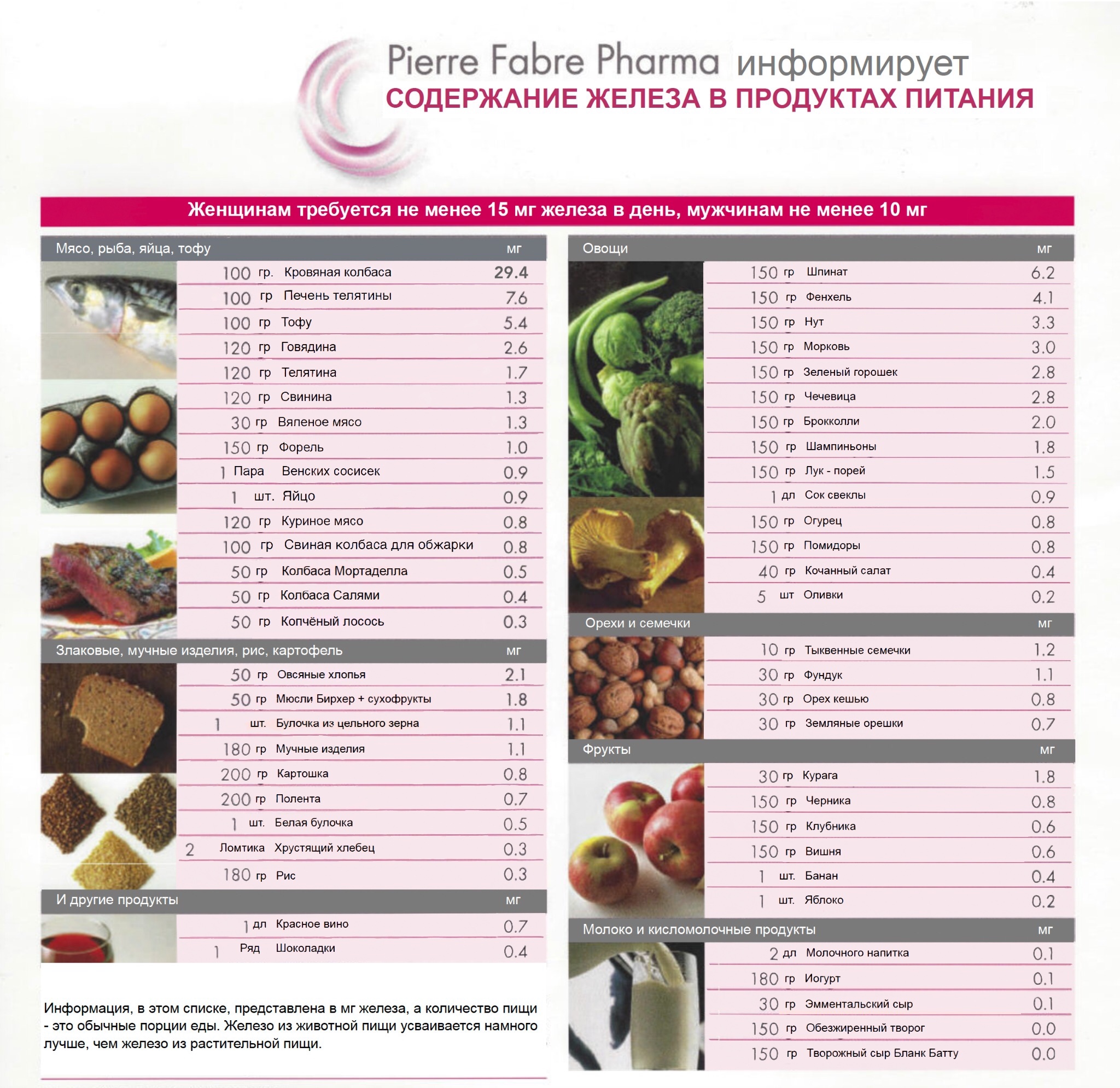
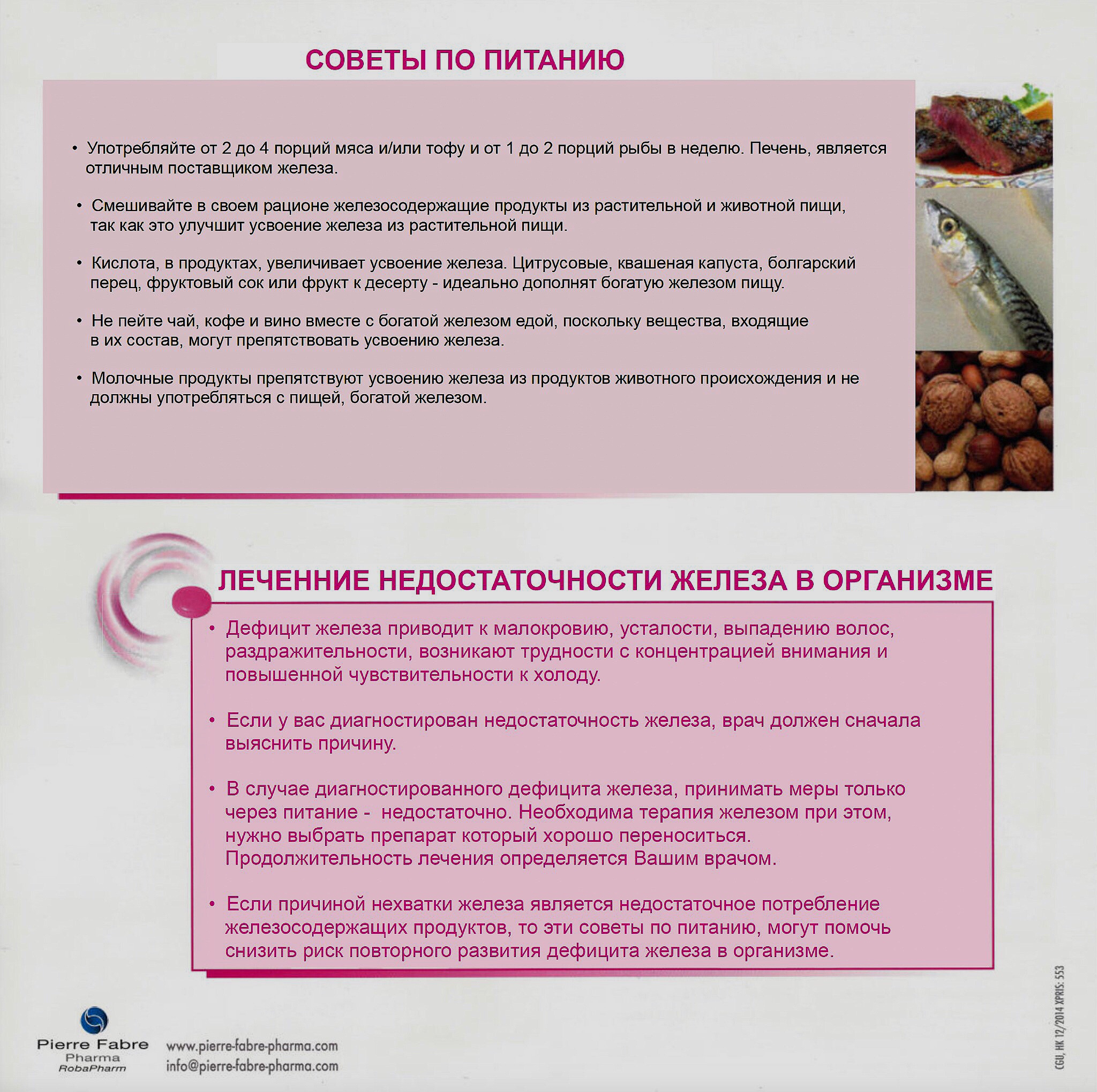
Несколько практических советов как правильно подобрать продукты питания учитывая тонкие нюансы усвоения железа из пищи:
Примите во внимание: Если запасы железа в организме истощены, пополнить их только диетой, практически невозможно
Необходима консультация специалиста, чтобы установить причину и начать соответствующее лечение.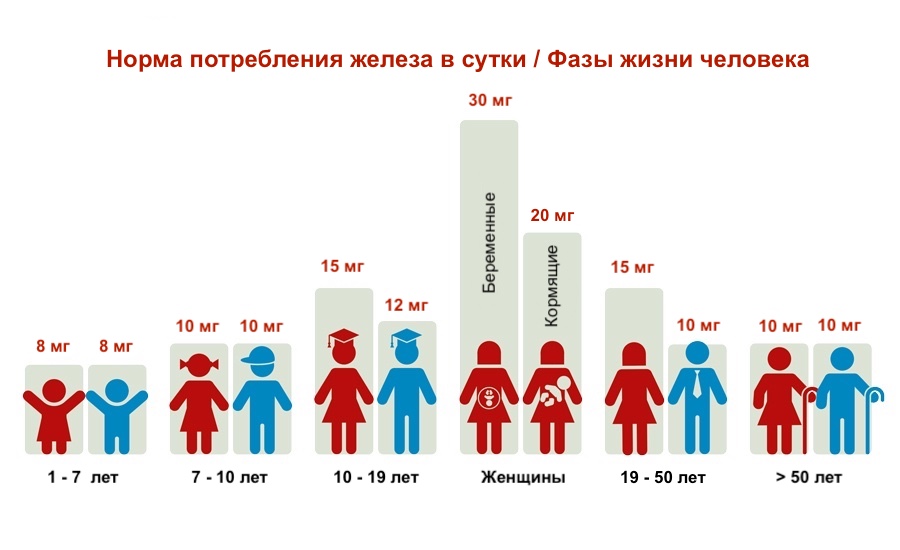
-

Leave packages unopened and untouched for 72 hours to prevent the spread of COVID-19!
-Researchers have advised that people need to leave their parcels and packages unopened and untouched for 72 hours to help stop the spread of severe acute respiratory syndrome coronavirus 2 (SARS-CoV-2) that causes COVID-19 disease. The virus, as is evident from the raging pandemic across the world, is highly infectious and could survive on surfaces for up to 72 hours.

Researchers from Bath, Bristol, and Southampton have come up with a set of recommendations to prevent the spread of the infection between individuals. COVID-19 pandemic has infected over 4 million individuals worldwide and has killed nearly three hundred thousand. The virus is highly infective and most commonly spreads via the aerosols released when an infected person coughs or sneezes. Researchers have found that this virus can remain active on surfaces for up to 72 hours, and this allows these surfaces to be able to transmit the infection to an uninfected person easily.
Some of the recommendations offered on the website include:
- All packages and parcels received via post need to be kept unopened for up to 72 hours, the website says. This can reduce the risk of getting infection passed on from one person to another. The team explained on the website, “It can take up to three days (72 hours) for the coronavirus to completely die on hard surfaces – such as cardboard, plastic, or metal. If you can wait three days, then the risk of catching the virus is at its lowest. If you are receiving a delivery, can you put things in a spare cupboard for three days before you use them? If three days isn’t possible, then aim for as long as you can – as soon as the virus leaves our bodies, it starts to die, so even after one day, it is much weaker than it was before.”
- All surfaces around the home need to be regularly disinfected. High contact surfaces such as doorknobs, switches, handles, tabletops, remotes, etc. need to be specially cleaned routinely to prevent the spread of the infection from one person to another.
- Household members need to be especially aware of not spreading the infection between themselves by using separate towels.
#covid19 #infection #medicalnews #medicalservice #health #fitness #healthy_life #swiss #medicalconcierge #treatments #prevention
-

Геммотерапия или Жизненная сила из почек и молодых побегов растений
-
Геммотерапия или
Жизненная сила из почек и молодых побегов растенийВ почках и молодых побегах растений содержатся ценные биологически – активные вещества. В геммотерапии используется именно эта обновляющая сила природы. Полезные микронутриенты, которые содержаться в почках и молодых побегах являются жизненно важными и высокоэффективными.
Почку растения (лат. Gemmo) определенно можно назвать – «Источником, где сконцентрирована жизненная сила». Количество стволовых клеток, здесь очень высоко и соответственно, именно отсюда генерируются новые клетки. В почках заложен так называемый «Кодовый план» строения всего растения.

Широкая область применения
Уже в древнем Египте использовались почки растений в медицинских целях, методы фитоэмбриотерапии применяли в свое время лекари и знахари в далеком прошлом, а в 12 векеХильдегарда Бингенская, которая считалась самой образованной женщиной своего времени, перерабатывала молодые побеги растений в лекарства. Но окончательно разработал эту часть натуропатии в 1950 –х годах доктор Пол Генри (1918–1988) из Бельгии
По словам доктора Генри, существуют определенные растения, в почках и побегах которых сконцентрированы высокоэффективные вещества в различных соединениях.
Пол Генри провел множество исследований и долго изучал в своей лаборатории всевозможные процессы, пока не нашел идеальный растворитель для экстрактов, полученных из почек и молодых побегов. С тех пор, геммо-мацераты (холодной вытяжки) производят при помощи смеси из глицерина и спирта, а затем разбавляют их в пропорции 1 к 10. Результаты и разработанные методы доктора Генри, были внесены во французскую, а позже и в европейскую фармакопейную книгу.
Почки растений обладают общеоздоровительными свойствами, которые наблюдаются у практически всех геммо-мацератов, а отличаются они только в силе своего действия. Так, почти каждый мацерат обладает противовоспалительными и противоревматоидными свойствами, а также свойствами выводить жидкость из организма путем стимуляции фагоцитоза и улучшения дренажной системы организма.

Некоторые примеры использования геммотерапии в практике:
Мацерат почек малины применяется при гинекологических отклонениях. Это лучшее средство для женского здоровья, и неудивительно – учитывая, что чай из листьев малины используется при беременности и родах. Геммоспрей из почек малины, оказывает регулирующее действие на баланс женских гормонов, что объясняет широкий спектр применения данного экстракта. Спрей оказывает также спазмолитическое действие на мышцы матки. При проблемах, связанных с женским циклом или во время климактерического периода геммоспрей из почек малины является частью концепции лечения. Который, можно сочетать и дополнять, например, эссенциями из других растений или спагирик – экстрактами и эссенциями.
Почки клюквы находят еще более широкое применение. Они оказывают противовоспалительное действие как на органы мочеиспускательной системы, так и на кишечник. Они укрепляют соединительные ткани и замедляют старение кожи. Почки этого растения оказывают регулирующее влияние на гормональный баланс женщины – особенно в период менопаузы.
Лист Смоковницы, уже с библейского представления об Адаме и Еве, был связан с гениталиями и интимным. Геммоспрей из почек инжира, оказывает регулирующее действие на центры контроля наших гормонов. Он действует успокаивающе на нервную систему и нейтрализует последствия стресса, почки инжира помогут также легче справиться с переживаниями интимного характера. Как раз эти два эффекта очень нужны, когда речь идет о проблемах частей тела, которые и были прикрыты у Адама и Евы листком смоковницы.

Эффективная, простая и практичная в применении терапия
По сравнению с другими видами натуропатической терапии – геммотерапия, в том виде, в котором мы можем её применять сейчас, относиться к сравнительно молодому методу лечения, но потенциал ее – очень высок, а применение терапии – очень простое.
Геммо – экстракты доступны в виде практичных спреев для орошения ротовой полости. Наносить их необходимо на слизистую оболочку рта (для достижения оптимального действия спрея, необходимо за 15 минут до впрыскивания и 15 минут после впрыскивания ничего не кушать и не пить). В результате чего, геммо – экстракты, через слизистую оболочку рта, попадают в кровь в неизмененном виде. Таким образом, они действуют намного быстрее и эффективнее еще и потому, что не разрушаются, так как не проходят через желудочно-кишечный тракт. Геммо – мацераты можно комбинировать между собой или использовать их для усиления действия других лекарственных препаратов. В аптеках можно встретить препараты с дополнительной надписью
«комп» которая может быть прописана как русскими, так и латинскими буквами – она расшифровывается как композиция и обозначает, что в состав данного спрея входят несколько действующих растительных компонентов, которые были специально разработаны для симптомов, терапия которых более эффективна при комбинации действующих веществ и их терапевтических свойств. К таким симптомам и отклонениям относятся, например – нарушение обмена веществ, боли опорно – двигательного аппарата, менструальные жалобы и симптомы во время климактерического периода и менопаузы.Сейчас, нам доступен большой выбор геммо – экстрактов и каждый из них по-своему полезен и эффективен – выбрать правильный Вам поможет специалист, фармацевт или лечащий врач, учитывая Ваши симптомы.
-
Beneficial effects of Vitamin D on illness Covid 19
-
A new study published on the preprint server medRxiv* in May 2020 shows that vitamin D could have a beneficial effect on the course of illness for COVID-19 patients.
What decides COVID-19 outcomes?
Even as the COVID-19 outbreak continues to cost lives and cause tremendous sickness in almost every country of the world, scientists are grappling with a lack of information as to what causes the virus to thrive and how they can block its spread.
The current study aims at finding a causal association between vitamin D levels and COVID-19 outcomes, taking into account the observed link between the geographical location above the tropical latitudes with the severity of illness. The researchers also model the vitamin D-pandemic relationship in two ways. Finally, they analyze how the mechanisms of disease in COVID-19 involve vitamin D and how they can be used to mitigate the severity of the condition.
The most severe outbreaks of COVID-19 have been associated with higher latitudes above 30oN. Global reports reveal that the spread of the virus and the fatalities are significantly related to the latitude of the region.
In the past, outbreaks of coronaviruses and influenza viruses have followed a markedly seasonal trend. Seasons are, of course, related to the latitudes, and this helps explain some of this variation.
Winter transmission is higher with enveloped viruses like the coronaviruses because they are more easily destroyed by heat and by ultraviolet radiation than other viruses. However, this doesn’t account for the higher fatality rates at higher latitudes.
Vitamin D is involved in calcium metabolism but also in regulating the immune system. Since vitamin D is produced in the skin by a sunlight-activated process, deficiency can occur seasonally in the temperate zones.
Low vitamin D levels are associated with old age, dark skin, low levels of sunlight exposure, dietary deficiency, and non-fortified foods. Italy, the European country, which experienced the most significant number of severe and fatal COVID-19 cases, also has the highest levels of vitamin D deficiency.
How was the study done?
The researchers, independent doctors, gathered data on COVID-19 cases, recoveries and deaths from the John Hopkins public repository, and latitude-based population data from the Center for International Earth Science Information Network, Columbia University.
The fatalities due to the illness were analyzed by latitude up to March 28, 2020, by putting the total number of deaths for each location into separate data sets spanning 5 degrees of latitude each, from 40 oN to 70 oN. This was used to calculate the deaths per million at each increment of latitude.
The severity of illness was also compared with the timeline of global viral spread, to determine if the timing of infection onset plays a role in the severity of the outbreak.
The next step was to analyze the severity by location for almost 240 locations where cases were reported, looking at the ratio of recoveries to deaths, as well as the total fatality count. They also assessed the Epidemic Severity Index (ESI), comparing the severity to a reference hospital survival ratio S, which is about twice the severity of the seasonal flu in the US.
The ESI scores are plotted both linearly and logarithmically. The linear plot shows the total number of deaths, while the log form shows locations that have minimal ESI values that escape the linear graph.
Locations at which cases were reported within the first six weeks of the first Wuhan outbreak are examined in-depth, and outliers are identified.
Modeling with causal and noncausal frameworks
Using a formal causal inference (CI) framework, they plotted directed acyclic graphs (DAGs) to find causal relationships. The large-scale pandemic makes it easy to use such models with multiple, distinct, and independent input variables. These allow for qualitative analysis, with the generation of predictions that can be compared with observed data to arrive at strong causal conclusions.
More conventional CI models quantify the strength of a causal relationship through a single model. The current model is aimed at identifying a causal relationship by creating two opposing models to express the two contrasting answers to the hypothesis. This results in testable predictions that can be compared with observations to test the fit of the model.
Exogenous variables fall into three categories: sources of vitamin D, causes of vitamin D deficiency and causes of disease unrelated to vitamin D. Illnesses are also classified the same way as those that reduce vitamin D, those that are caused by or worsened by vitamin D deficiency, and those which are unrelated to vitamin D levels.
After adjusting for biases and confounders, the predictions generated by both models were tested, and the differences tabulated. These were then compared with the available observations.
What did the study show?
The researchers found several interesting observations that support the causal hypothesis.
Latitude-linked differences in severity
All severe outbreaks causing large numbers of deaths (3% to 37%) have occurred above +30ºN latitude, in winter locations, for an average fatality of 11% for latitudes from 30ºN to 55ºN.
Outbreaks in tropical and southern hemisphere countries were mild, with a fatality rate of 0.2% per million. This cannot be due to the timing of the outbreaks, which also occurred in 35 Asian locations near China within 14 days of the start of systematic reporting on January 22, 2020. Spreading across international boundaries, the pandemic affected most other places within the next three weeks.
ESI by location
The peak ESI scores showed that 9 locations had severe outbreaks scores over 2.5, and all were at latitudes above 30°N. Above this line, the timeline correlates with severity, but not below it. In other words, more southern locations had many outbreaks, but none became severe.
Vitamin D deficiency
Italy has among the highest rates of hypovitaminosis D and COVID-19 severity. Women between 60-80 years have low vitamin D levels in up to 76% of cases, as well as 82% of patients enrolled in various rehabilitation programs for neurological-based deficits.
Outlier locations
Canada, Germany, Japan, and South Korea are outlier locations above 35°N, but with mild severities up to April 28, 2020. All have adequate vitamin D levels, on average.
On the other hand, Iran had a severe outbreak though it is at a sunny latitude of 31°N to 32°N, while Israel, though in the same latitude, had fewer deaths. However, Iran has a very high prevalence of vitamin D deficiency but not Israel.
Again, Brazil and the Philippines are outliers in the region below 30°N. Both are known to have very high levels of vitamin D deficiency and also large populations of mixed-origin and Black people.
Vitamin D deficiency could increase the severity of COVID-19
The researchers found that many of the predictions of the causal model match the observed data. For instance:
- Severe outbreaks and high case-fatality rates in the northern hemisphere winter locations only
- Tropical and southern latitudes have mild outbreaks even without quarantine or isolation measures
- Outliers in the northern latitudes have high vitamin D levels and less severe outbreaks
- Outliers in the southern latitudes have very large proportions of severe vitamin D deficiency and so more severe outbreaks
- Pregnancy and infancy are very unexpectedly not at risk in the developed countries of the northern latitudes because of routine supplementation with vitamin D
- Factors that inhibit or lower vitamin D levels such as older age, the use of sunblock, certain medical conditions and behaviors (like sunlight avoidance or constant use of full-body clothing), dietary deficiency or certain drugs, were observed to increase the case fatality rate even in low-latitude locations
- Communities with dark skin in both the US and the UK (winter hemisphere locations) have double the average case fatality rates
The second noncausal model, which assumes that vitamin D is not a cause for severe COVID-19, predicts:
- No latitude-case fatality rate correlation
- Winter locations will show lower rates of spread only in the presence of quarantine, isolation and social distancing
- Adequate vitamin D levels and high intakes of fish at winter locations will not be linked to lower fatalities
- Pregnancy and infancy will be high risk despite routine vitamin D supplementation
- Factors like older age, sunblock use and other behaviors or conditions which reduce vitamin D levels will not show correlation with case fatality rates in healthy people
- Case fatality rates will show a correlation with other illnesses only if they are unrelated to vitamin D, after accounting for confounding factors
*Important Notice
medRxiv publishes preliminary scientific reports that are not peer-reviewed and, therefore, not be regarded as conclusive, guide clinical practice/health-related behavior, or treated as established information.
(partly by News-medical.net)
-

-

-

Вам поставлен диагноз – Синдром сухого глаза
-Вам поставлен диагноз – Синдром сухого глаза
Эта сопутствующая терапия может принести Вам быстрое облегчение
(прежде чем начать лечение – проконсультируйтесь с Вашим лечащим врачом)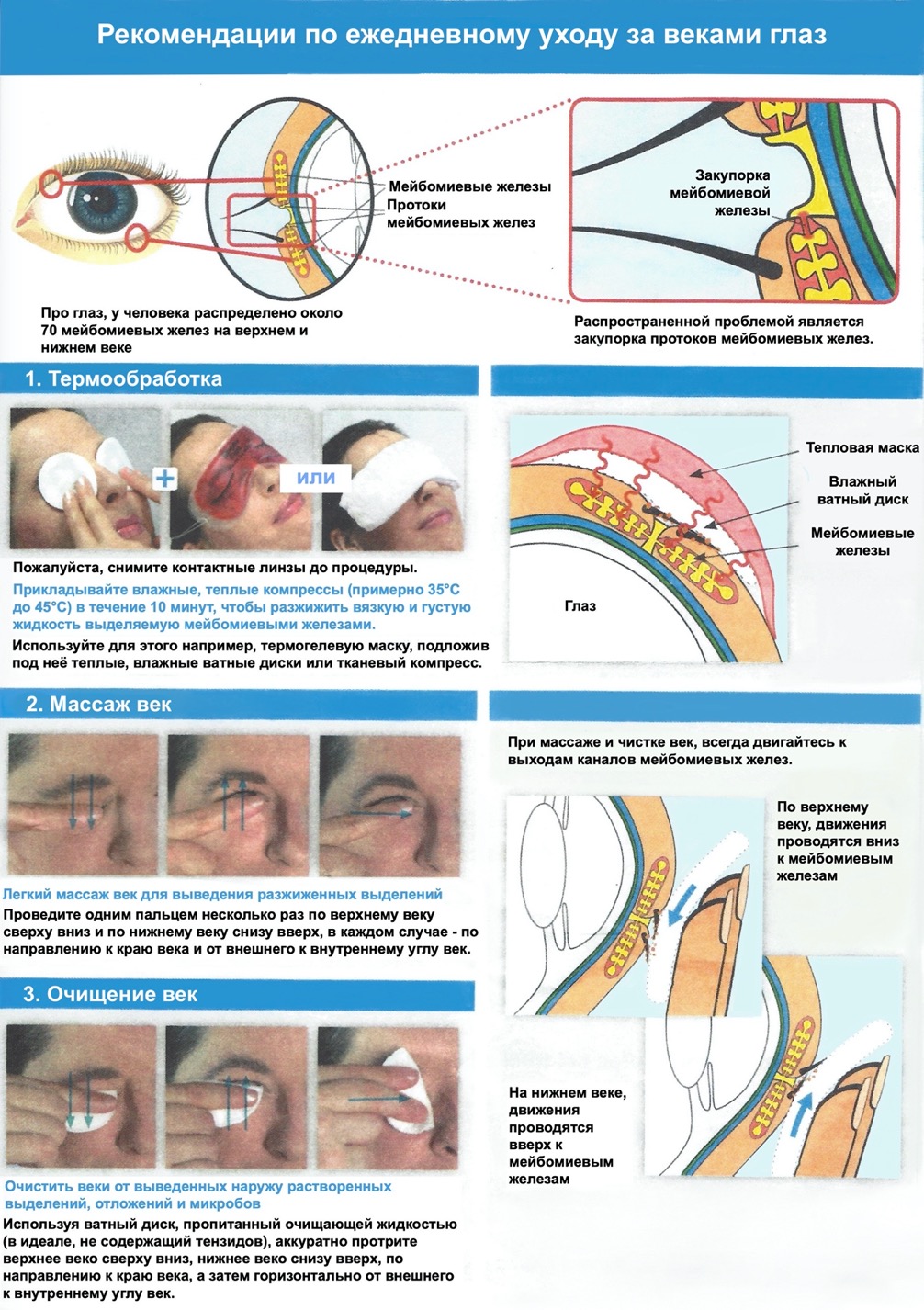
-

news
-Tермоабляция доброкачественных узлов щитовидной
При термоабляции, под контролем ультразвука, вводиться специальный термозонд в узел щитовидной железы, при помощи которого узел точечно разрушается. В узлах щитовидной железы, нет нервных волокон, поэтому процедура, проводимая под местной анестезией, проходит безболезненно и необходимости в проведении общего наркоза нет.
Ткани, разрушенные данным методом, устраняются организмом и узел сжимается. Процесс сжатия узла, зависит от его составляющих структур и составляет от 60 до 90%, от его изначального объема, в течении года.
Индикация и применение данного метода
Возможность проведения термоабляции, Вам необходимо будет обсудить с лечащим врачом, на личной консультации. Данная методика не подходит при злокачественном раке щитовидной железы.
В основном, поддаются терапии следующие заболевания щитовидной железы:- Симптоматические доброкачественные узловые образования
- Симптоматические кисты щитовидной железы
- Быстрорастущие узлы или кистозные образования
- Визуально мешающие узлы или кистозные образования
- «Горячие» узловые образования (автономная аденома) в случае, если проведение радиойодтерапии нежелательно
- Пациенты, которые не согласны на хирургическое вмешательство
- Пациенты, которым для проведения операции, наркоз можно проводить только в ограниченных случаях, либо нельзя проводить вообще.
Узлы Щитовидной железы (Tермоабляция)
Минимально – инвазивное лечение узлов щитовидной железы
Узлы щитовидной железы, наряду с увеличением щитовидной железы (зобом), относятся к числу распространенных доброкачественных заболеваний, которые встречаются у 50% населения. Узлы щитовидной железы могут вызвать как проблемы при давлении на близлежащие структуры, так и эстетические проблемы. Часто, данные узлы, все еще удаляются хирургическим путем. После операции, остаются рубцы на шее и могут возникнуть осложнения такие как, кровоподтеки, воспаления, или паралич нерва голосовых связок. К этому добавляются риски, которые могут возникнуть при наркозе. При наличии узлов определенного характера, вначале рекомендуется провести лечение с применением методов ядерной терапии. Недостатком, применения методов ядерной медицины, является возможная, постоянная недостаточность щитовидной железы.
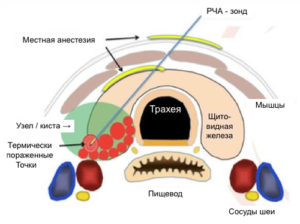
Изображение поперечного среза шеи и области щитовидной железы. Желтые линии, обозначают месторасположение двух депо с обезболивающим средством. У кончика термического зонда образуются небольшие тепловые поля, которые позволяют провести точечную абляцию узла (зеленый овал).
Термоаблация узлов щитовидной железы успешно применяется на международном уровне уже с 2002 года. По сравнению с хирургическим вмешательством, абляция является намного щадящим, но очень эффективным, микротерапевтическим методом лечения доброкачественных узлов, после которого не остаётся больших рубцов на коже. Кроме того, риск осложнений значительно ниже, чем при операции. Данная терапия, проходит практически безболезненно и наркоз, при её проведении, не требуется.
Обработанные данным методом ткани, устраняются организмом. Показатель эффективности
абляции составляет более 90%.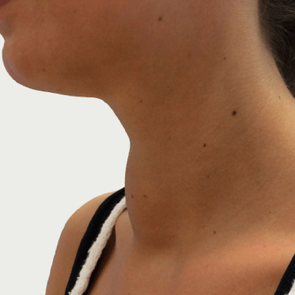
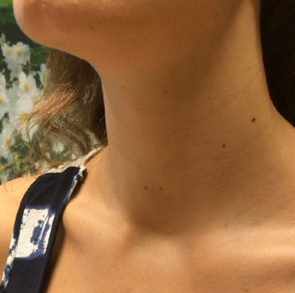
Фотографии и снимки – УЗИ узл
щитовидной железы до проведения
термоабляции и через 6 месяцев
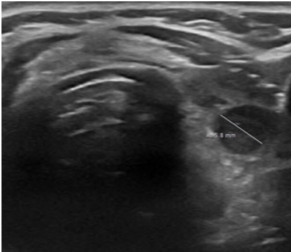
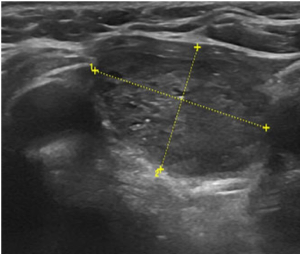
Часто задаваемые вопросы:
Как проводиться терапия методом термоабляции?
После проведения местной анестезии кожи, и под визуализированным контролем УЗИ, вводится тонкий зонд в узел щитовидной железы. Затем, кончик зонда нагревается до тех пор, пока клетки, находящиеся в непосредственной близости зонда, не будут разрушены, не оказывая при этом негативное влияние на остальные, здоровые ткани. Данный процесс повторяется несколько раз, пока не будет обработан весь узел.Насколько большим может быть узел, чтобы выполнить данную терапию?
Маленькие узлы до 30см3 можно пролечить за один сеанс. Для больших узлов, доходящих до 150 см3, может потребоваться несколько сеансов.
Является ли термоабляция экспериментальным методом лечения?
Термоабляция – это отнюдь не экспериментальная терапия, а международно признанный медицинский метод лечения.Как обследуется узел перед проведением термоабляционного лечения?
Для исключения возможной злокачественности узла, необходимо провести цитологическое исследование перед проведением терапии. Данное обследование, является минимально инвазивным и проводиться под местной анестезией.